Bone complications affect most people with Gaucher disease, study finds
Delayed diagnosis and treatment tied to poorer bone outcomes in Tunisia
Written by |
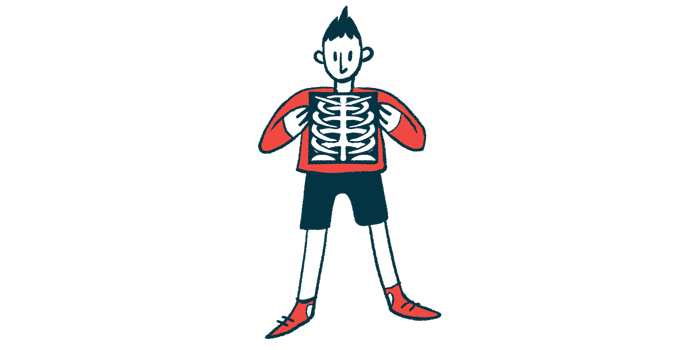
Bone manifestations — including pain, structural changes, and reduced bone density — are common among people with Gaucher disease in Tunisia, according to a study.
Although bone disease affected nearly two-thirds of patients, it was rarely the main reason treatment was started. Only slightly more than half of those eligible ultimately received therapy, a delay the researchers say likely contributed to poorer outcomes.
“A major challenge in our setting is the delayed initiation of specific therapies, primarily due to late diagnosis and limited access to treatment,” researchers wrote, emphasizing “the importance of early and [regular] bone disease screening to optimize therapeutic impact on skeletal health.”
The study, “Bone involvement in Gaucher disease: Data from a North African registry,” was published in Reumatología Clínica.

How Gaucher disease affects bones
Gaucher disease is an inherited condition caused by mutations in the GBA1 gene, which results in a shortage of an enzyme needed to break down certain fatty molecules. As a result, these fats build up to toxic levels inside cells, mainly immune cells called macrophages. These enlarged, fat-laden cells are known as Gaucher cells.
Bone manifestations are common in Gaucher disease. Although the exact cause is not fully understood, the buildup of Gaucher cells in the bone marrow — the soft tissue inside bones where blood cells are made — is thought to disrupt blood flow and interfere with normal bone structure.
These changes can lead to acute or chronic bone pain, reduced bone density (osteopenia), brittle bones (osteoporosis), bone tissue damage caused by poor blood supply (aseptic osteonecrosis), bone lesions, and a higher risk of fractures.
Treatment for Gaucher disease can reduce the buildup of Gaucher cells in the bone marrow and lower the frequency of severe bone pain episodes, known as bone crises. However, bone-related symptoms often improve more slowly than other Gaucher symptoms, and improvements in bone density may be incomplete.
“In light of these findings, we decided to conduct a study aimed at describing bone involvement in the Tunisian registry of [Gaucher disease] patients and assessing specific therapies for [Gaucher disease] impact on bone structural changes,” the researchers wrote.
Study examines bone involvement in Tunisian Gaucher patients
The researchers analyzed data from 74 people with Gaucher disease who were followed at the Internal Medicine Department of Mongi Slim University Hospital and the Pediatrics Department of La Rabta University Hospital between 2006 and 2022.
On average, symptoms began at age 18.7, but diagnosis did not occur until about age 25.2, pointing to a substantial diagnostic delay. Men and women were equally represented.
More than half of the patients (61%) were born to related parents, including 22 people (30%) whose parents were first-degree relatives. A confirmed family history of Gaucher disease was reported in 31 patients (42%), while another five (7%) had a family history strongly suggestive of the condition.
Nearly all participants (96%) had type 1 Gaucher disease, the most common form of the disorder. The N370S mutation in the GBA1 gene was the most frequently reported genetic change.
Bone involvement was the third most common disease feature, affecting 48 people (65%). In 17 people (23%), painful bone crises were the first symptoms that led to a Gaucher disease diagnosis.
Bone involvement was frequent in our [study population]. Even though it is rare, rheumatologists must always keep in mind this disease especially when other diseases are ruled out.
Bone imaging was performed in 56 people (76%) and revealed abnormalities in 41 of them (73%).
Among those who underwent imaging, bone marrow infiltration was detected in 19 patients (70%), and aseptic osteonecrosis in six (22%). An Erlenmeyer flask deformity of the femur, an early sign of Gaucher-related bone involvement, was observed in four people (5%).
Bone lesions were found in two people (3%). In both cases, Gaucher disease was diagnosed only after cancers such as multiple myeloma — which can cause similar bone damage — were ruled out.
Bone density measurements were available for 49 people (66%). These showed osteopenia in 17 patients (35%) and osteoporosis in seven (14%).
Of the 55 people (74%) who met the criteria for Gaucher disease-specific therapy at their first evaluation, only 30 (41%) ultimately received treatment. Most gained access through clinical trials or compassionate use programs, which allow patients to receive approved or experimental therapies when other options are unavailable.
Delayed treatment linked to poorer bone outcomes
The researchers noted that treatment was most often started because of other Gaucher symptoms, not bone involvement, which was typically identified later through screening.
The most commonly used therapy was VPRIV (velaglucerase alfa), an approved enzyme replacement therapy (ERT) for Gaucher disease, which was prescribed to 19 patients (26%). After one year of treatment, bone density returned to normal levels in two people with osteopenia and in one with osteoporosis.
By contrast, bone density did not return to normal in patients with osteopenia or osteoporosis who received other therapies.
According to the researchers, delayed access to treatment, driven by late diagnosis and limited availability of therapies, likely contributed to poorer bone outcomes in this group.
“Bone involvement was frequent in our [study population],” the researchers concluded. “Even though it is rare, rheumatologists must always keep in mind this disease especially when other diseases are ruled out.”